
Is a radon test legally required for my purchase?
Missouri DHSS states that Missouri has no regulations requiring radon testing. That statement does not decide what your lender or signed agreement requires. Have your agent or attorney identify the relevant inspection provisions, notice deadlines and access rights in your documents. Missouri DHSS radon guidance provides the state context.
Illinois has radon disclosure requirements for covered residential sales. The required information is distinct from a measurement report. Use IEMA-OHS real estate guidance and have your transaction adviser check which rules and exceptions apply to the property. Do not carry a Missouri assumption across the state line.
How do I schedule a test before closing?
Work backward from the date when you must respond to inspection findings, rather than from the moving date. The exposure period is only part of the schedule. Access, device placement, retrieval, analysis and reporting also need room on the calendar.
- Give the tester the address, inspection-response deadline and closing date.
- Confirm who authorizes entry and who will provide access at both appointments.
- Ask for written preparation instructions and share them with occupants.
- Confirm the report delivery date and recipients.
- Leave time to review the result and obtain a proposal if further work is discussed.
Tell Air Sense about showings, contractors or planned ventilation changes. Those details help identify scheduling conflicts before equipment is placed. Availability must be confirmed for the actual property.
Can I rely on the seller’s existing radon test?
Request the full report, not only a photograph of the result. EPA’s home buyer and seller guide identifies test age, altered conditions and the level of the home as reasons to consider another measurement.
| Check | Question to resolve |
|---|---|
| Property and room | Does the report identify this house and the lower level you intend to use? |
| Date and duration | When did measurement start and stop? |
| Method and conditions | Who performed it, and were required conditions documented? |
| Changes since testing | Has the basement, ventilation or mitigation system changed? |
Our seller-report review guide expands this checklist. Share uncertainties with the tester and your transaction representatives before accepting a prior report.
What happens if the radon result is elevated?
Keep the complete report and ask the tester to explain the result and any follow-up recommendation. Give a mitigation contractor the report and information about the foundation and existing system. Request a written proposal that separates installation, any related work and verification testing.
Who pays is a transaction question, not an automatic consequence of the number. Use the purchase agreement and negotiated written terms to establish responsibility, completion dates and access. Read who pays after a radon finding before discussing a repair request.
An elevated result is also not, by itself, a decision about whether to purchase. Compare the proposed work, timing and evidence with your other inspection findings. Our guide to buying a house with radon or an existing system outlines questions for that decision.
What should I obtain after seller-arranged mitigation?
Ask for the installation invoice, system operating instructions, warranty terms and the agreed follow-up test report. Establish who orders that test and when the written result must be available. A photograph of new piping or a running fan demonstrates equipment, not the indoor radon concentration.
If work or reporting will extend beyond a contractual deadline, have your transaction representatives address that in writing. Do not assume the service contractor can change your inspection or closing terms.
How can Air Sense help with the transaction?
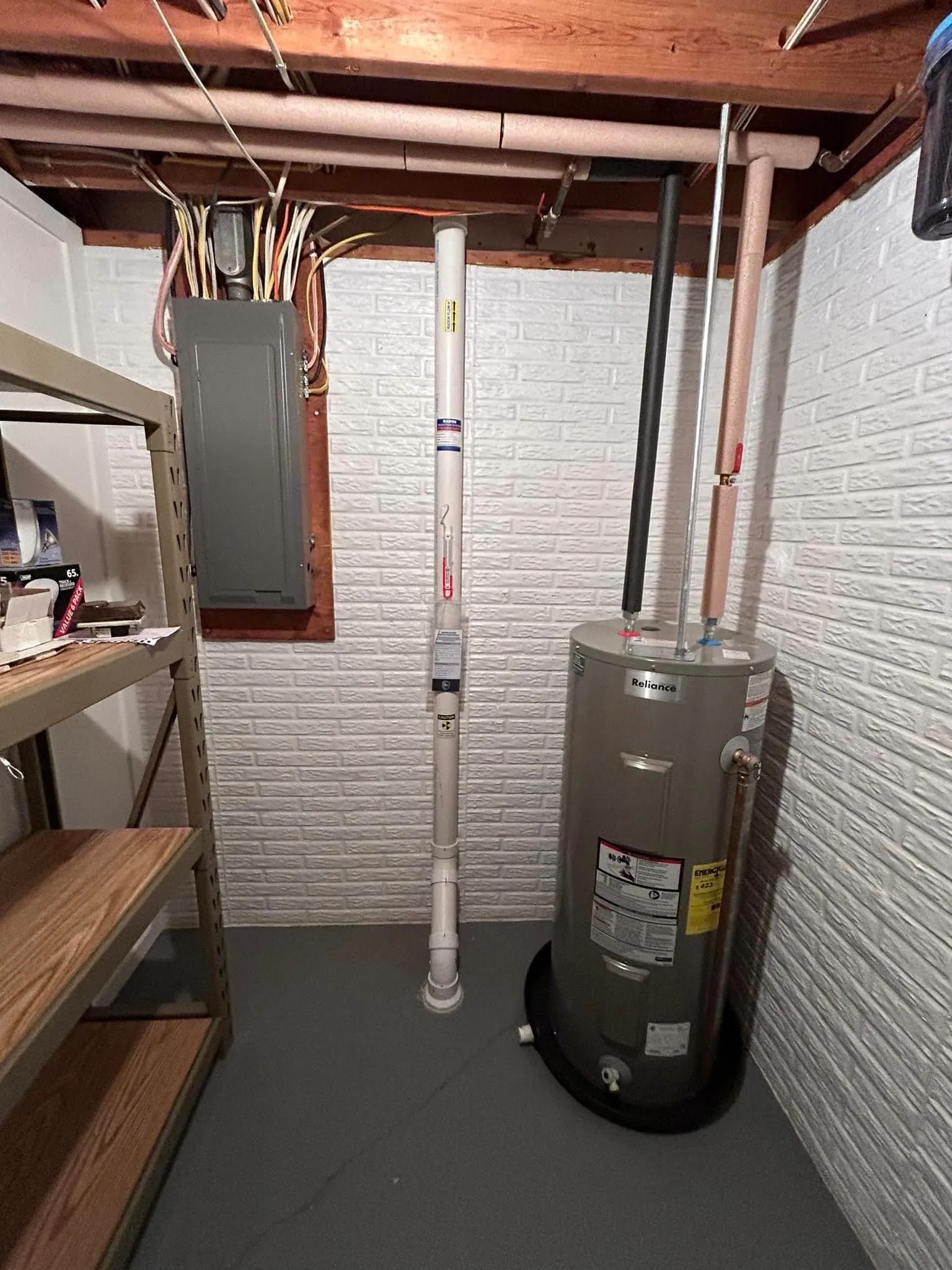
Air Sense Environmental is the provider behind this service information site. The original installation photographs shown here document Air Sense work; they are not a test result for the home you are buying. Contact Air Sense at 314-664-9807 with the address, deadline, access contact and any prior report to discuss a testing visit. Ask which report and timing are included before booking.
Questions before you book
Does a disclosure prove that testing was completed?
No. Ask for the actual measurement report and review its property, dates, location and method.
Can a running mitigation fan replace a test?
No. The equipment’s operation and the indoor radon measurement answer different questions. Obtain the report needed for the transaction.
Can Air Sense guarantee a report before my deadline?
The schedule must be confirmed for your booking. Provide the deadline before authorizing the visit and include retrieval and reporting time.